

Can I refuse a smart meter?
Smart meters aren't compulsory but it may be your only option

The Government is aiming for all homes in England, Scotland and Wales to have a smart meter by the end of 2030. Under current rules, suppliers can't FORCE you to get a smart meter, but if your current traditional meter is approaching the end of its life, you may not have a choice...
Smart meters are NOT mandatory — but traditional meters are increasingly hard to come by

If you live in England, Scotland or Wales and your supplier asks to replace your meter with a smart meter, you can usually refuse to have one installed, as they aren’t compulsory.
However, it gets more complicated if your existing meter is faulty or has reached its 'best before date’. In these cases, your energy provider is required to replace it under the regulator’s rules – and stocks of traditional (non-smart) meters are running low, as firms push to meet Government smart meter targets.
This means your options are limited if your existing meter needs to be replaced, but you really don’t want a smart meter. You can:
Ask if your supplier can fit a traditional meter instead – though most suppliers told us they wouldn’t, or would only do so in “limited or exceptional cases”. In practice, this is only likely to happen where fitting a traditional meter is necessary to maintain your energy supply.
Accept a smart meter but have it set to dumb mode.
Switch to a supplier that can offer a traditional meter – though there’s no guarantee you’ll get one.
We asked all major energy firms whether they still offer traditional meters – here’s what they told us:
Supplier | Will it fit a traditional meter? |
|---|---|
British Gas | No |
Ecotricity | In limited cases subject to stock availability (1) |
EDF | Only if a smart meter isn't suitable. |
E.on Next | In limited cases subject to stock availability. |
Octopus | No |
Ovo | Only if a smart meter isn't suitable. |
Scottish Power | In limited cases subject to stock availability (2) |
Utilita | No |
Updated March 2026. (1) Reported as having healthy stock. (2). Limited stock available.
Meters need to be replaced every 10 to 20 years
Like most things, energy meters don't last forever, so suppliers need to replace older meters to ensure they continue to give accurate readings. Suppliers determine when this needs to be done by checking a meter's 'certification date'.
How can I check if my meter is at the end of its certified life?
Gas and electricity meters are usually given a ‘best before’ date when they are manufactured. Energy suppliers may refer to this as the 'certification date'. Certification is done by meter examiners appointed by the Office for Product Safety and Standards (OPSS). Once a meter has passed its certification date, it needs to be replaced, as it's unlikely to continue to take accurate readings.
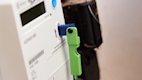
Some meters may have a sticker on, which will say the month and year it was ‘certified’, which will give you an idea of how old it is. But there's no guarantee the sticker is correct, as sometimes the OPSS extends the certified life after carrying out service tests and the sticker may not be updated.
Your energy supplier has a list of the certifications dates of all meters that they supply. It will get in touch when your meter is nearing the end of its working life, and will arrange for a smart meter to be installed.
It's worth noting, your electricity meter won’t expire if it has an MID certification. This will be shown on your meter as ‘CE’ followed by an ‘M’ and two numbers in a box, followed by four more numbers.
Similarly, gas meters don't have an expiry date. If you’ve been told that your gas meter has expired and needs replacing, ask your supplier for more details.
Some older Economy 7 meters are set to stop working this year
Some older Economy 7 meters use the radio teleswitch service (RTS) to transmit and receive data. The RTS service is being switched off in phases, with the final deadline expected to be the end of 2026.
So if you have one of these meters, you'll need to get it replaced as soon as possible, otherwise your meter may lose important functionality. If you're an economy 7 customer, contact your supplier to find out if your meter will be affected. If so, you'll likely have to have a smart meter installed.
Can you change back from a smart meter?
Once you've had a smart meter installed, you can't switch back to a traditional meter. This includes moving into a property that already has one. Old traditional meters aren't being manufactured or refurbished anymore, and there aren't many left. So once you've got a smart meter, usually there's no going back.
If you're forced to get one (and really don't want it), you can ask for it to be put in 'dumb' mode

If you do end up with a smart meter and you really don't want one, your only option is to request your supplier puts it into 'dumb mode'.
This means it won't have any 'smart' functionality and will work as a traditional meter does. It won't send meter readings automatically to your supplier, so you'll need to manually send them on a regular basis to ensure your bill is accurate.
For some customers with certain suppliers, dumb mode won't be possible. For example, those who are on multi-rate tariffs such as Economy 7, may need to have their smart meter in smart mode in order to access the different rates. Similarly, those on prepayment meters may need their smart meter to be 'smart' to be able to top-up.
It's also worth bearing in mind some suppliers make having or getting smart meters a condition of signing up to their tariffs.
You'll automatically get compensation for some smart meter issues
From 23 February onwards, you'll be eligible for £40 in automatic compensation per issue from your energy supplier if:
-
You have to wait more than six weeks for an appointment to have your smart meter installed. This only applies to new or first-time installations (not repairs and replacements).
-
Your smart meter installation appointment "fails" due to a "fault within the supplier's control". For example, not having the right engineer with the right skillset, the right metering equipment, or the correct additional equipment (such as safety equipment) necessary to complete the appointment.
-
You report an issue with your smart meter to your energy supplier, and it does not provide you with a "resolution plan" within five working days. Here, suppliers are expected to explain what they've done to assess the issue – which covers both smart meters and linked in-home devices (IHDs) – and what actions they are taking to resolve it.
For now, you won't be eligible for any automatic compensation if your meter isn't sending readings to your supplier.
We've asked Ofgem if suppliers will have to pay compensation for delays or issues that started before 23 February, and we'll update this guide when we have more details. Ofgem has said it will review these new policies in early 2027.
Smart meters do offer certain benefits
Energy suppliers are offering smart meters to every household, with the ambition that everyone (where possible) in England, Wales and Scotland will have working smart meters by the end of 2030.
If your meter is fully functioning, it's not mandatory for you to replace it with a smart meter – so you're free to refuse if you're offered one. Yet there are benefits to getting one...

Smart meters can send meter readings automatically. They communicate with your energy supplier remotely, automatically sending readings — sometimes as often as every 30 minutes — meaning you don't have to remember to manually send them every month.
More accurate bills. With automatic meter readings, your energy supplier will always have up-to-date info on your energy usage and so it can bill you accurately. If you have a traditional meter and you forget to send a reading, you'll be charged an 'estimate' — which may be more than you've actually used.

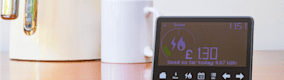
Real(ish)-time info on your usage. Smart meters come with an in-home display, which shows your household energy use — in pounds and pence, and kilowatt hours — in near-real time. Smart meters therefore, can make it easier for you to track and control your energy use, with the aim of helping you change your habits to save on energy (and the environment).
Prepayment customers can top-up without leaving home. Energy customers who prepay for their energy can top-up their meters from the comfort of their home. You usually just need an app or online account to do it. This means no more rushing to the shop or Post Office in your PJs if you're about to run out of credit.
You'll be able access special time-of-use tariffs and payment schemes. Smart meters open up different tariff options which could help you save (and some even let you make money)...
- Those who charge an EV at home use cut-price off-peak energy to charge their vehicle.
- Similarly, if you have a heat pump you can get special rates to power it more cheaply.
- Those with solar panels and/or solar batteries can get paid to generate electricity and sell it back to the grid.
- Smart Time-of-use' tariffs allow you to take advantage of cheap electricity when there's surplus electricity on the grid - some suppliers will even pay you to use energy during these times.
- The National Grid and energy suppliers run schemes that pay you to shift your energy use to off-peak times.
Quick questions
Can all properties have a smart meter?
There are a few situations where you might not be able to have a smart meter installed, for example if:
-
Your existing meter is in a difficult to access location
-
You live in a flat with a meter in a communal area (i.e not in your own flat)
-
Your home doesn't have a strong enough signal to connect to the smart meter network
-
You already have a SMETS1 meter (the first generation of smart meters) – these are being upgraded remotely to the SMETS2 systems (with no engineer visit required)
-
Your home has extremely thick walls, which can stop your smart meters from sending readings to your energy supplier
-
Your meter's on an asbestos backboard
Are old non-smart meters unsafe?
Some suppliers have told customers that their old meter is unsafe and needs to be replaced with a smart meter. According to Which? there's actually no evidence that an old traditional meter can become dangerous, but it is more likely to become inaccurate, especially as it nears (or goes beyond) its 'end of working life' certification date.
Will a smart meter save me money?
Not directly, no. But if you use it to track your energy usage and make energy-saving changes to your daily habits, you will likely see your bills go down.
Can I get a smart meter if I live in a rented property?
Generally, whoever pays the energy bills can choose if they have a smart meter installed. So if you pay for your gas and electricity directly to an energy company, you have the right to have a smart meter installed and to switch your energy supplier. However, it’s always best to check with your landlord first, as your tenancy agreement may stipulate the kind of meter that can be installed.
If your landlord pays the bills, the decision to get a smart meter is up to them.
Will a smart meter work if I live in a rural area?
If you live in a rural area, or somewhere known for having a poor mobile phone signal, the chances are that a smart meter may struggle to work in your house. It doesn't mean you can't have one but you could end up with inaccurate energy bills if your meter readings are not being communicated to your supplier properly or on a regular basis.
Is my data secure?
Yes, your data is safe and secure. Personal details like your name and address aren’t stored on your smart meter – the only information it collects is about your gas and electricity usage. Smart meters use a secure wireless network connection to send your usage directly to your energy supplier, so it can give you accurate bills.
There are also laws in place that stop energy suppliers from sharing any of your information with third parties, unless you give permission.
This is the first incarnation of this guide. We'd love to know your thoughts and experiences with smart meters, or if you've any feedback or questions we've not answered. Let us know in the Can I refuse a smart meter? forum thread.
Share this guide?