
Energy firms to trial ‘low or no Standing Charge’ tariffs from April – here’s what we know so far


Four energy suppliers will introduce 'low or no Standing Charge' tariffs on a trial basis this year, regulator Ofgem has confirmed to MoneySavingExpert.com (MSE). The firms taking part are British Gas, EDF, E.ON and Octopus. We don't have all the details yet, but here's what we know so far.
Standing Charges – which you pay just for the facility of having gas and electricity, even if you don't use any – currently make up over £300 of the average bill, penalising lower-use households and disincentivising people from cutting their energy usage.
MSE founder Martin Lewis has previously said he gets more complaints about Standing Charges than anything else relating to energy bills – and he's long campaigned to get them lowered, either directly or via a 'low or no Standing Charge' tariff.
ITV's The Martin Lewis Money Show Live – Tuesday 24 February
Ofgem's chief executive, Jonathan Brearley, revealed the 'low or no Standing Charges' trial to Martin on ITV's The Martin Lewis Money Show this week.
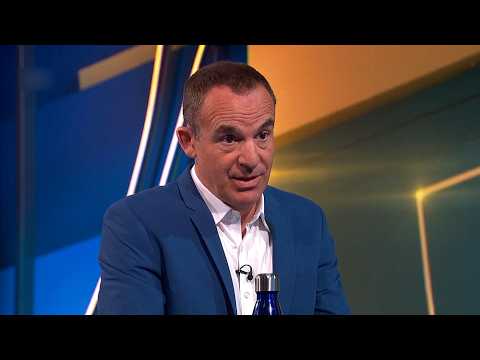

From The Martin Lewis Money Show Live on Tuesday 24 February 2026 courtesy of ITV. All rights reserved. Watch the full episode on ITVX.
Full transcript of Martin's conversation with Mr Brearley
Audience member: "In 2025, Ofgem promised that all major suppliers would introduce one low, fixed Standing Charge tariff. What has happened? It's now coming to the end of February and we've seen absolutely nothing."
Martin Lewis: "He's totally right. You promised in January [2025] it would be a Price Cap 'low or no Standing Charge' tariff version. Then you said it wouldn't be in the Price Cap and we'd have it by early this year. And yet, nothing. What's going on, Jonathan?"
Ofgem boss Jonathan Brearley: "So look, two things to recognise. First of all, I know how strongly people feel about Standing Charges – it's one of the biggest ever responses we had to our consultation. And I know it's frustrating for many people, and we have taken more time than we thought. But let me explain why.
"The problem is this stuff pays for the wires that connect us to the grid. It pays for those costs that can't be moved. And if we move stuff off the Standing Charge onto the unit rate, then some people are going to be better off and some people are going to be worse off.
"Now, we came forward with both of those options, and it wasn't just the companies that were unsure about this. The consumer groups said to us, they really worry we're going to make some people worse off.
"What I can say today, though, is we have a new large-scale pilot with four companies. So let me just list them: British Gas, Octopus, EDF and E.on, who are going to come forward with at least £150 off their Standing Charge.
"The unit rate will go up as a result, and that will come out from April. We're getting to a point where we want to test this at scale because we want to know what happens, for example, if you are a customer that goes on that tariff and that tariff makes you worse off. So we will test it there."
Martin: "This has been death of a thousand cuts, though. The problem with it not being on the Price Cap is all those vulnerable people who never switch will not have access to this. What are you going to do about them?"
Mr Brearley: "Well look, first of all, we want to see how this works for that 150,000 customers. Then we'll see how we change the rules and regulations later on.
"But what the consumer group said to me when we proposed putting it in the Price Cap..."
Martin: "Not all the consumer groups."
Mr Brearley: "A lot of them though, some of the ones we really trust. Citizens Advice, for example, Consumer Scotland, some of the disability charities – all of [them] have urged us to be cautious, so they want to try it at scale, see what happens to customers and then take it from there."
Martin: "I think the thing about the Standing Charge is, you say it's fixed costs. Well, when I go into a shop and I buy a book, they don't say to me, 'you have to pay £5 a month to be a member of the shop, and then you pay £5 for the book'. They say '£10 for a book, and all our fixed costs are covered by the book'.
"The concept that you have to cover fixed costs by a fixed charge is not how it works across all other sectors, and I don't understand why you do it in this sector."
Mr Brearley: "So there are some utilities that are quite similar. So that used to be the way we paid for our phones, for example. That's also the way we pay for our water, for example. So we have all of these."
Martin: "I wouldn't want to compare you to water."
Mr Brearley: "I agree, but that's why we want to take this slowly. So we're not saying we're not doing anything, but we want to test this at scale, see how people respond and take it from there."
Martin to the audience member: "You said you want to come back or are you done?"
Audience member: "I would agree with with Martin that it doesn't fully work across the sector. It works in some sectors but not in all sectors. And I don't think it works in the energy sector. The Standing Charge is just too high. Every day, even if you don't use electricity, you get hit by a Standing Charge. It doesn't seem fair."
How the new 'low or no Standing Charge' tariffs will work
Suppliers will decide on the price, though Ofgem has said each tariff should:
-
Result in at least a £150 reduction on the Standing Charge for those using both gas and electricity.
-
Include "reasonable" unit rates that "are not disproportionate".
-
Last for one year.
Ofgem added that it will monitor suppliers to make sure they're following this guidance.
Who can get them – and from when?
Ofgem has said it expects about 150,000 people across all four suppliers taking part to be eligible for the scheme. Each supplier will decide on the eligibility criteria and the exact launch dates – though Ofgem expects these to go live from April.
Supplier | Eligibility ✅ | Launch date 📆 |
|---|---|---|
British Gas | TBC. | TBC. |
EDF | You must use at least: | TBC. |
E.ON | You must have: | Spring 2026. |
Octopus | You must hit a minimum yearly usage, which Octopus will set at a later date. | The first half of 2026. |
Suppliers have yet to set the unit rates – so overall costs are unclear
The idea behind a 'low or no Standing Charge' tariff is to help some low-usage households save on bills. You will likely face a higher unit rate as a result of the 'low or no' Standing Charge, but reductions in the Standing Charge could mean you pay less overall – though suppliers are yet to confirm the exact rates.
Martin has also previously expressed concerns about the fact that 'low or no Standing Charge' tariffs sit outside the Energy Price Cap. This means that technically, there's no limit on what firms can charge – even if they slash the Standing Charge, unit prices are set at their discretion.
These tariffs will also NOT cut costs for all users.
Timeline of plans to lower Standing Charges
Ofgem had previously promised that a 'low or no Standing Charge' tariff would be introduced across all firms by the end of January 2026. Once it became clear that Ofgem would not hit that deadline, Martin said it felt "like a series of over-promises and under-deliveries", adding that the regulator's plans had been "diluted more than a shot of Vimto in a bath".
See the full timeline of plans to lower Standing Charges below:
-
In December 2024, Ofgem proposed requiring suppliers to offer a 'low or no Standing Charge' option, which would have been controlled by the Energy Price Cap.
-
In February 2025, Ofgem began its first consultation on the details.
-
In July 2025, Ofgem rowed back on these initial plans, and said it was looking at whether suppliers should offer low or no Standing Charge tariffs that AREN'T covered by the Price Cap. At the time, it said it expected to see the new tariffs being offered from January 2026.
-
In September 2025, Ofgem confirmed that all major energy suppliers should offer at least one low Standing Charge tariff to households – and that these wouldn't fall under the Price Cap. Its press release reiterated that the tariffs "would be available to customers in every region of Great Britain (England, Scotland and Wales) by January 2026".
-
In November 2025, Martin grilled Ofgem boss Jonathan Brearley over the issue on a special instalment of The Martin Lewis Podcast.
-
In February 2026, the Government separately confirmed that Standing Charges will fall by £39 a year on average from 1 April 2026 due to transferring the cost of funding the Warm Home Discount scheme to unit rates instead. Martin welcomed the news, but warned that more needed to be done.


Share this guide?


 Latest weekly email









Clever ways to calculate your finances


